Explore Crisil, a company of S&P Global
Formerly known as Global Research & Risk Solutions
October 16, 2025
 Blog
Blog
Blog
 Share
Share




The global syndicated loans market, essential for financing large-scale corporate and infrastructure projects, reached a loan volume of USD 0.7 trillion in 2024 and is projected to grow to USD 1.3trn by 2029, with a CAGR of 14.7%1. A key trend in 2025 is the surge in ESG-linked loans, driven by demand for sustainable financing in renewables and infrastructure, with the US leading in leveraged loans and refinancing activity. While the global market benefits from cross-border deals and emerging market growth, the US’ robust financial infrastructure and high M&A activity make it a powerhouse, contributing a substantial portion of global syndicated loan volume, underscoring the need for advanced loan management systems to handle these complex, high-value transactions. Complementing this, the global loan management systems (LMS) market is projected to grow to USD 22.9bn by 2029, accelerating at a CAGR of 17.6%2.
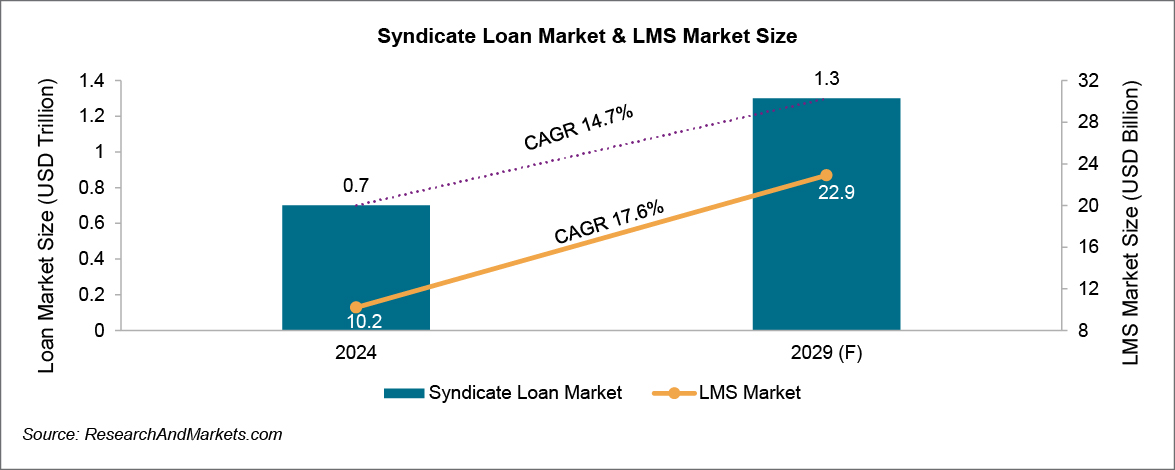
The robust growth in LMS Market reflects a transformative shift in how financial institutions (FIs) manage the loan lifecycles. Powered by automation, artificial intelligence (AI), and cloud technology, loan management applications are revolutionizing lending by streamlining processes, reducing risks, and enhancing borrower experiences.
Role of LMS in Modern Lending
LMS is a sophisticated digital platform designed to navigate the intricate loan lifecycle, spanning origination, underwriting, servicing and portfolio management.
For banks, non-banking financial companies and fintechs, these platforms have become critical to remain competitive in a digital-first world as they enable handling of high volumes and meet scalability demands of complex financing.
LMS adoption offers benefits across stages of loan activity.
At the origination stage, these platforms streamline borrower applications by integrating diverse data sources, accelerating intake and reducing manual errors to process thousands of applications concurrently.
During underwriting, these support rapid risk assessments and decision-making, ensuring precision across large-scale portfolios while complying with regulatory standards such as Dodd-Frank, or General Data Protection Regulations (GDPR).
In the servicing phase, automated workflows manage payments, covenants and borrower communications for large loan pools, maintaining operational efficiency under high transaction volumes.
For portfolio management, too, LMS deliver real-time analytics to track performance and mitigate risks, enabling institutions to scale seamlessly as the loan volume grows, just the way it is in syndicated deals involving multiple lenders.
By orchestrating each stage with precision and scalability, these platforms empower institutions to manage complexity, enhance borrower experiences and maintain competitive agility.
Thus, these systems are critical for FIs across segments, whether handling retail, commercial, small and medium enterprises or offering specialised lending such as mortgages or Islamic finance. By integrating data from credit bureaus, financial statements and alternative sources, these tools streamline workflows and ensure compliance.
Key features include:
- Loan Origination and Syndication: The LMS handles loan origination, syndication, and participant management, including credit approval, loan structuring, and documentation
- Loan Servicing and Funding: The system manages loan servicing, funding, and drawdowns, including payment processing, interest calculations, and principal amortization
- Interest Rate and Fee Management: The LMS manages interest rates and fees, including calculating interest, accruing fees, and generating invoices
- Credit Facility and Collateral Management: The system manages credit facilities and collateral, including tracking available credit, managing utilization, and monitoring collateral coverage
- Risk Management and Reporting: The LMS manages risk, including tracking credit exposure, monitoring loan performance, and generating reports and analytics
- Compliance and Regulatory Reporting: The system generates compliance and regulatory reports, including reports for Basel III, IFRS 9, and other regulatory requirements
- Security, Scalability, and Integration: The LMS has robust security and access controls, that are scalable and flexible, and integrate with other systems, including core banking systems, accounting systems, and credit bureaus
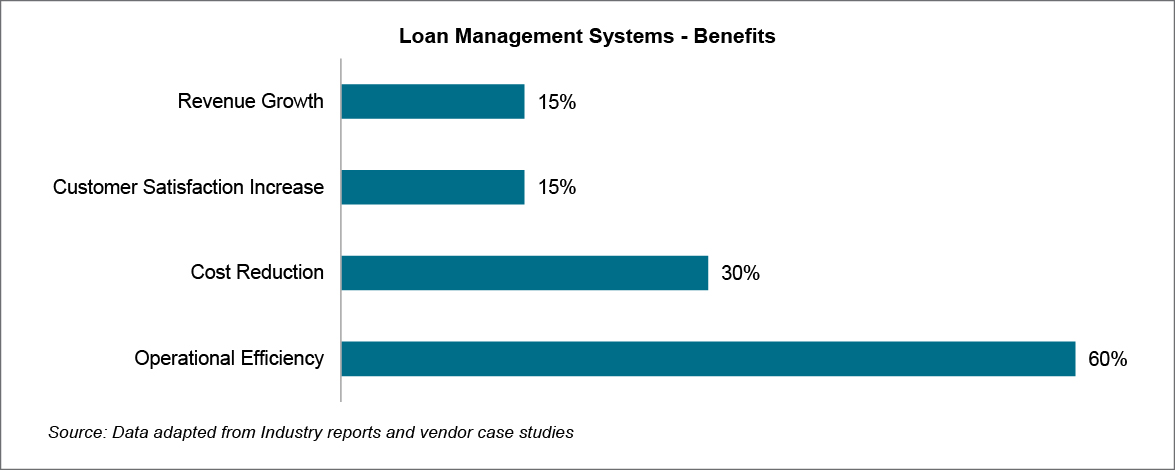
As shown in the graph below, LMS reduces operational costs by up to 30% for lenders and delivers faster, more personalized experiences for borrowers.
Transformation initiatives on the rise
Adoption of advanced LMS has revolutionized the commercial lending landscape, enabling banks to streamline their operations, improve customer satisfaction, and drive business growth. By leveraging cutting-edge technologies such as cloud computing, artificial intelligence (AI), and machine learning (ML), these systems have transformed the way banks manage loan origination, servicing, and portfolio management.
Benefits of advanced LMS include:
- Improved Efficiency: Automation of manual processes, such as data entry and document processing, has significantly reduced processing times, enabling banks to respond quickly to customer needs and stay competitive in a fast-paced market
- Enhanced Transparency: Advanced LMS provide real-time visibility into loan portfolios, enabling banks to make informed decisions, manage risk, and ensure compliance with regulatory requirements
- Increased Customer Satisfaction: By providing a seamless and personalized lending experience, banks can improve customer satisfaction, loyalty, and retention, ultimately driving business growth and revenue
- Better Risk Management: Advanced LMS enable banks to analyze large datasets, identify potential risks, and make data-driven decisions, reducing the likelihood of defaults and improving overall portfolio performance
- Scalability and Flexibility: Cloud-based LMS solutions enable banks to scale their operations quickly and efficiently, adapting to changing market conditions and customer needs
Given their many benefits, the adoption of innovative LMS solutions will remain a key factor in determining the long-term success of banks as the financial services industry evolves. Indeed, multiple banks have already demonstrated the value of advanced LMS in transforming commercial lending operations, driving business growth and improving customer satisfaction.
Strategic Challenges and Opportunities
In the USD 1.3 tillion global syndicated loans market, loan management applications are pivotal for financial institutions seeking to streamline complex financing structures. Yet, their adoption demands navigating challenges such as:
- Legacy System Integration: Reconciling outdated legacy systems with modern platforms requires costly middleware and extensive IT restructuring
- High Upfront Costs: Substantial upfront investments, frequently in the millions for large-scale deployments, strain financial resources
- Algorithmic Bias: Ensuring equitable lending practices necessitates rigorous oversight to prevent algorithmic biases
- Cybersecurity Threats: Safeguarding against sophisticated cyber threats requires state-of-the-art security protocols
- Regulatory Compliance: Maintaining compliance with shifting regulations like General Data Protection Regulation (GDPR) demands agile, adaptive systems
Overcoming Hurdles:
Banks are addressing the challenges by investing in cloud-based loan management applications, scalable solutions, rigorous oversight protocols, state-of-the-art security measures and agile systems.
Tackling these challenges can also unlock strategic opportunities. Frictionless and personalised lending experiences can drive retention and cost efficiency, while advanced analytics and ML algorithms can enhance risk management and support growth in high-value markets like syndicated loans, enabling banks to expand their market share.
By aligning technology with business objectives, FIs can turn challenges into catalysts for innovation, positioning themselves as leaders in a digital-first lending landscape and unlocking new avenues of growth and success in the global syndicated loans market.
Partnering for successful transformation
Adoption of loan management applications is a crucial aspect of modern lending. FIs that have successfully navigated this process have achieved significant benefits.
Careful analysis of operational workflows has enabled these institutions to identify inefficiencies and align their technology investments with a long-term vision for competitive differentiation.
Platforms with robust interoperability and advanced security protocols have facilitated the seamless management of intricate transactions while safeguarding critical data.
Tailored training initiatives have empowered teams to master digital tools, fostering a culture of innovation and cross-departmental collaboration.
Adaptive governance structures have also been established to proactively address regulatory complexities, preserving operational fluidity while ensuring compliance.
As a result, borrower engagement has been elevated through intuitive, sophisticated digital interfaces that redefine customer interactions and drive loyalty through seamless and responsive experiences.
Ultimately, the integration of these strategies has enabled FIs to transcend operational constraints, emerging as leaders in the digital lending paradigm and driving industry-wide innovation.
At Crisil, we specialise in guiding institutions through this transformation, leveraging proprietary tools to deploy cutting-edge AI driven solution that automate and streamline the entire loan lifecycle. Our expertise enables banks to overcome obstacles, align technology with business goals and achieve compliance, scalability and enhanced customer satisfaction.
Partnering with us will ensure success through tailored assessments, seamless integrations and strategic solutions. Whether you’re a global bank or a regional player, we can augment your transformation.
1ResearchAndMarkets.com
2Loan Management Software Market Report 2025